


Blog
Girth Gears: Traditional Ring Vs Multi-Segmented

In heavy industrial environments, girth gears are exposed to extremely harsh operating conditions. The risk isn’t just selecting the wrong size; it’s choosing a design that doesn’t fit the specifications of your site. Whether you opt for a traditional ring gear, or a multi-segmented configuration, without careful installation and maintenance, minor issues such as misalignment, overheating, accelerated wear and tooth damage can easily result in extended shutdowns and avoidable repair spend.
Most of these issues trace back to design choice. If the chosen gear design doesn’t reflect the power and speed requirements, load case, access constraints, installation approach or maintenance strategy, small deviations become persistent, resulting in high vibration and tooth distress which could lead to lost production hours.
That’s why the ring vs multi-segmented decision matters. Understanding how each design behaves in your operating environment directly influences reliability, maintenance planning and total lifecycle cost - and ultimately keeps mills, kilns and dryers running to plan.
What are Girth Gears?
Girth Gears drive large rotating equipment such as kilns, mills and dryers in industries including mining, cement, power and sugar. They must be accurate, geometrically stable, wear‑resistant and capable of running continuously under heavy load. The key choice is between a conventional ring gear or a multi‑segmented design, which differ significantly in construction, materials, performance and installation.

Conventional Ring vs Multi‑Segmented Designs
Conventional ring gears are made as two or four large cast or fabricated segments. They offer rigidity but are limited by casting and machining capacity, require heavy handling, and depend on specialist lifting during installation.
Multi‑segmented gears are built from individually heat‑treated cast segments, with the number of pieces dictated by cost‑efficiency and drum size, typically starting from around eight, and rising to 24 or beyond for larger units. This allows better casting quality, accurate CNC machining, easier transport, simpler installation, and more efficient long‑term maintenance.

Key Differences
- Construction: Large, heavy segments (conventional) vs multiple identical, lighter segments (multi‑segmented), enabling easier transport, handling and erection.
- Material: Conventional designs use steel or cast iron; their size limits the use of superior ADI. Multi‑segmented gears can use ADI due to smaller segment size, improving strength, wear resistance and performance.
- Vibration: The high accuracy of multi‑segmented geometry reduces vibration significantly compared with traditional gears.
- Service Life: ADI segmented gears offer exceptional wear resistance and extended life.
Additional Advantages of Multi‑Segmented Gears
- Fast turnaround on tooth breakage: A spare segment can be installed within days rather than replacing a full traditional ring, which can take months.
- Reduced lead times: Segments can be produced in parallel and shipped in standard containers or on pallets - ideal for challenging overland access. Individual pieces can even be transported in a van if needed.
- Enhanced durability: Higher load‑carrying capacity, lower stress concentration, and reduced noise and vibration.
- Easy installation and replacement: No special lifting equipment required; segments align and bolt together easily.
Internal Rim Profiles: T‑Section vs Y‑Section
Historically, Y‑section gears dominated due to stiffness requirements, but FEA has shown that the lighter T‑section offers equal stiffness.
- T‑section: Rigid structure with good tolerance to minor pinion misalignment.
- Y‑section: Even material distribution and consistent support across the face width.
The best profile depends on equipment size, loading and alignment needs.
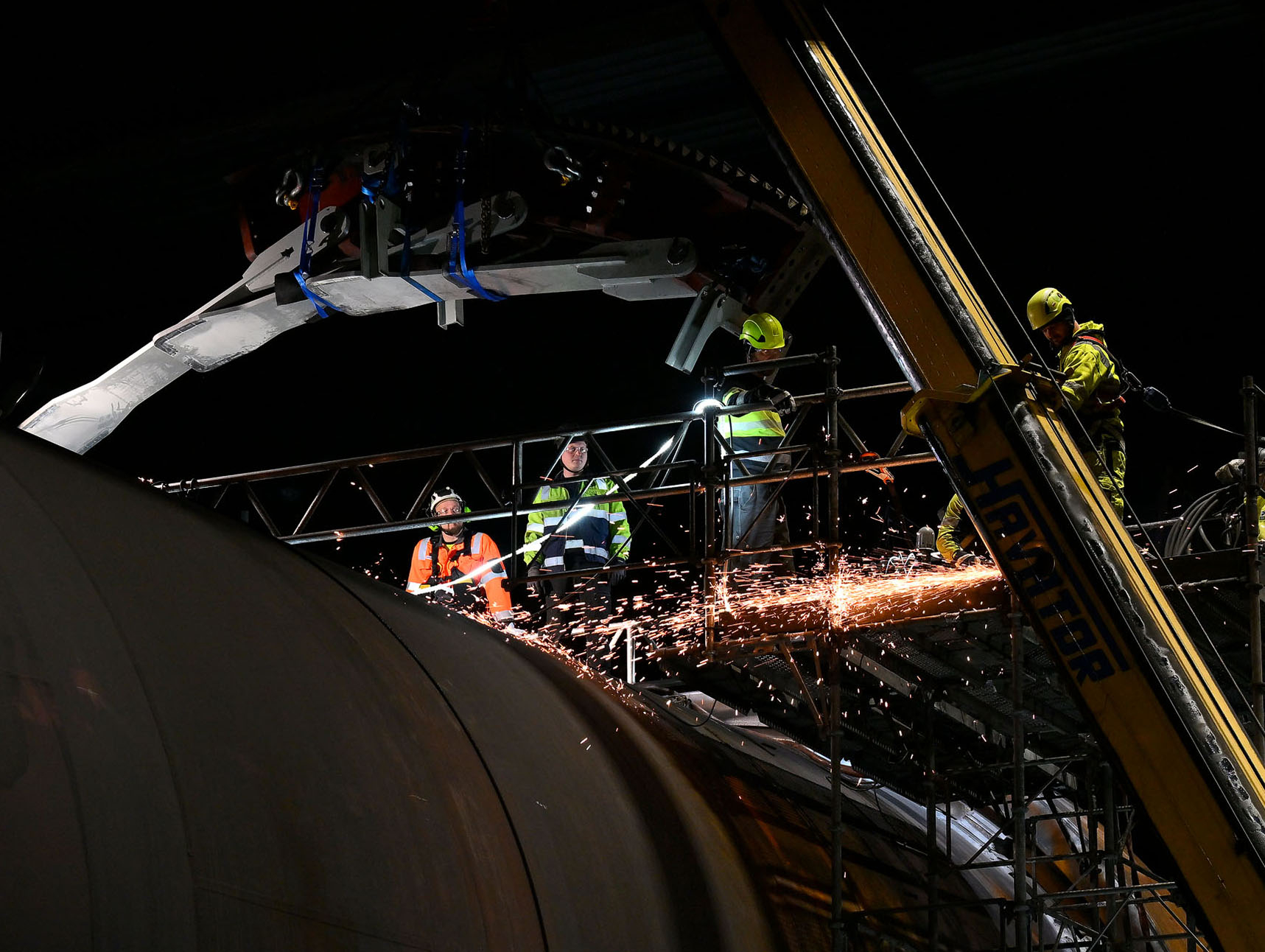
Common Misunderstandings
Even in well‑established industries, typical assumptions about girth gears often lead to incorrect decision-making, and the minor issues that ultimately lead to accelerated wear, avoidable repairs and ultimately shutdowns. A few of the most common include:
“The increased number of joints increases the risk of joint looseness causing operational problems”. - With traditional 2 or 4‑segment Y and T‑section gears, large bolts were used to hold the joints together. The high tightening torques required to stretch these joint bolts, combined with limited access during erection, often led to incorrect tightening and eventual looseness. However, detailed FEA carried out during the design stages of the multi‑segment concept allowed for an increased number of smaller, easily accessible joint bolts that can be tightened accurately. With multi‑segmented girth gears, joint looseness is effectively a thing of the past.
“All girth gears perform the same as long as they’re sized correctly.” - In reality, two gears with identical diameters and tooth number counts can behave very differently under load. Material choice, rim design, mounting method, and alignment tolerance all influence performance, vibration, tooth contact, and long‑term reliability.
“A two‑ or four‑segment one‑piece ring is always the stronger option.” - Strength isn’t only about mass. Modern segmented designs can distribute stress more efficiently, especially when manufactured from advanced materials such as ADI (Austempered Ductile Iron). In many applications, a well‑engineered multi‑segmented gear can outperform a traditional ring in both durability and strength, including wear behaviour.
“Multi-segmented gears are only used when access is restricted.” - Restricted access is one reason to choose a segmented design, but not the only one. Segmented gears also offer advantages in installation time, fine‑tuning alignment, future maintenance planning and predictable lifecycle management.
Applying this insight to your own girth gear project
If your operation depends on large‑diameter girth gears, whether for AG/SAG mills, ball mills, kilns, or dryers, working with specialists who understand both traditional and multi-segmented solutions is essential.
If you're evaluating options or facing challenges with an existing installation, our engineering team can help you navigate materials, design types, installation constraints, or service‑life optimisation.
Further reading: A real‑world example of this approach in action can be found in this case study here.